

THE PRACTICE OF
What Is Myofascial Release?
A Different Way of Listening to the Body
Quick Links:
Understanding the foundation
What Fascia Is
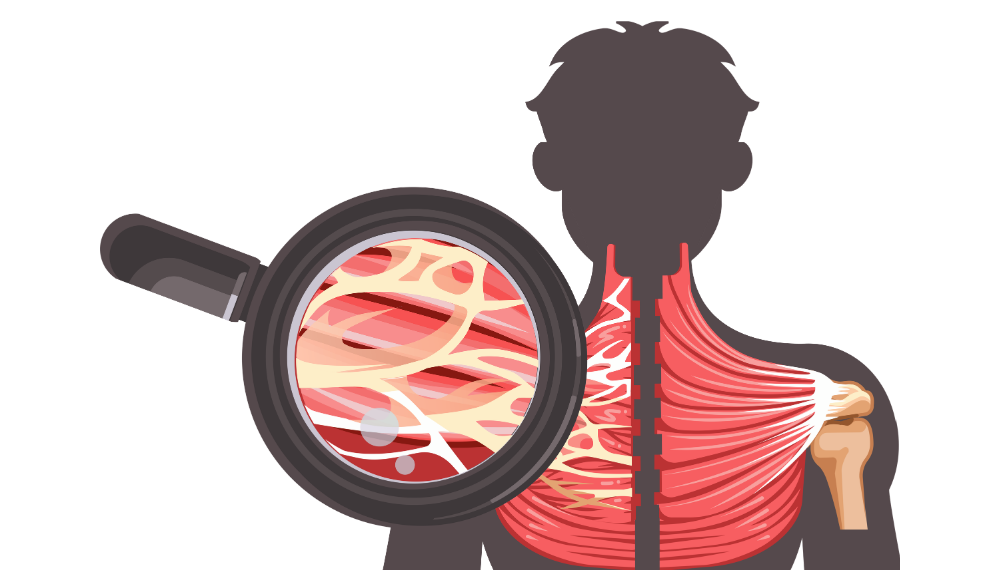
Myofascial Release (MFR) is a gentle, hands-on therapy that addresses restrictions in the fascia — the connective tissue that surrounds, supports, and connects every muscle, tendon, bone, nerve, and organ in your body.
Fascia doesn't just wrap around structures. It weaves through them. It extends all the way down to the cellular level, forming one continuous, three-dimensional network throughout your entire body.
Nothing in you functions in isolation. Everything is connected.
When fascia becomes restricted — from injury, surgery, inflammation, repetitive strain, stress, or trauma — it can create tension and pressure that spreads beyond the original site.
You may feel shoulder pain. But the restriction may involve your ribcage. Your abdomen. Your pelvis. Or somewhere your imaging never looked.
This is why treating only the area of pain doesn't always create lasting relief.
A Common Frustration
Why Traditional Treatment Sometimes Plateaus
In most physical therapy and medical settings, treatment follows the diagnosis.
Shoulder pain gets shoulder treatment. Back pain gets back treatment.
And for a lot of people, that works.
But when it doesn’t — when the pain keeps coming back, or never fully goes away — it usually means something else is going on that hasn’t been found yet.
The John Barnes approach looks at the whole body instead of just the area that hurts. We follow where the tension actually leads, which is often somewhere unexpected.

The approach
What Makes This Approach Different
If you’re picturing massage, this isn’t that. It’s not forceful, and it’s not a quick stretch-and-strengthen routine. It’s something different entirely.

Not massage
This is not forceful manipulation. And it is not a quick stretch-and-strengthen protocol.

Sustained & Gentle
We apply sustained, gentle pressure directly to areas of restriction. We hold the tissue long enough for it to respond.

Patience over Force
Fascial restrictions don't change with quick or aggressive force. They respond to patience. To consistency. To being worked with.
In a session, I apply gentle, sustained pressure directly to areas where the fascia is restricted. I hold it long enough for the tissue to actually respond. Fascia doesn’t release with quick force or aggressive stretching. It responds when you slow down and stay with it.
You can’t rush it. The work takes as long as it takes, and that’s OK.
Why This Work Sometimes Goes Deeper Than You Expect
One of the things that sets the John Barnes approach apart from other manual therapies is that it recognizes fascia as more than just a physical structure. Fascia doesn’t only hold tension from injuries and surgeries. It also holds tension from stress, from emotional experiences, and sometimes from trauma you may not even consciously remember.
This isn’t abstract or theoretical. When fascia gets restricted, the body braces around it. That bracing pattern can stay locked in place for years, long after the original event. And it doesn’t just affect your range of motion — it can affect your sleep, your energy, your mood, how your nervous system responds to things.
When that restriction starts to release during a session, some people feel it purely as a physical shift — pain decreasing, muscles letting go, breathing getting easier. But for others, there’s an emotional component too. Old tension surfaces. Sometimes people feel a wave of emotion they weren’t expecting, or a memory, or just a deep sense of relief that goes beyond the physical.
This is a normal part of the process, and it’s one of the reasons the work can produce changes that other approaches haven’t. When you address what the body is actually holding — not just the symptom on the surface — the relief tends to go deeper and last longer.
You don’t need to come in expecting an emotional experience. Most sessions are quiet and physical. But it’s worth knowing that if something comes up, that’s not unusual, and it’s not a problem. It usually means something important is releasing.
During & After Sessions
What People Often Notice
Many people describe:
A feeling of space in the body.
Reduced pain or pressure.
Easier breathing.
Improved mobility.
Deep relaxation.
Emotional release or a sense of relief that goes beyond the physical.
Sometimes change is immediate. Sometimes it unfolds gradually over the next few days.
The goal isn’t to force anything.
It’s to let the tissue release at its own pace so the change actually lasts.
“Within one session, my pain improved. Within six months, my mobility was fully restored, no surgery needed.”
— Magdalena H.
Is this for you?
Who Is It For?
If you’ve done the work — seen the specialists, tried the treatments, followed the referrals — and you still don’t feel right, this might be worth looking into.
Especially if you’ve been told there’s nothing more anyone can do. That usually just means no one has looked in the right place yet.
People come to me for all kinds of reasons, but these are the most common:
Chronic neck or back pain
Sports injuries
Headaches or jaw tension
Persistent injuries unresponsive to traditional therapy
Stress-related tension patterns
Post-surgical tightness
Pain that feels unexplained

The Bottom Line
If you’ve been told everything looks normal but you’re still in pain, that doesn’t mean nothing is wrong. It usually means no one has looked in the right place yet. That’s what this work is for — finding what’s actually driving the problem so the pain starts to change, not just get managed.
Questions? Reach Out.