

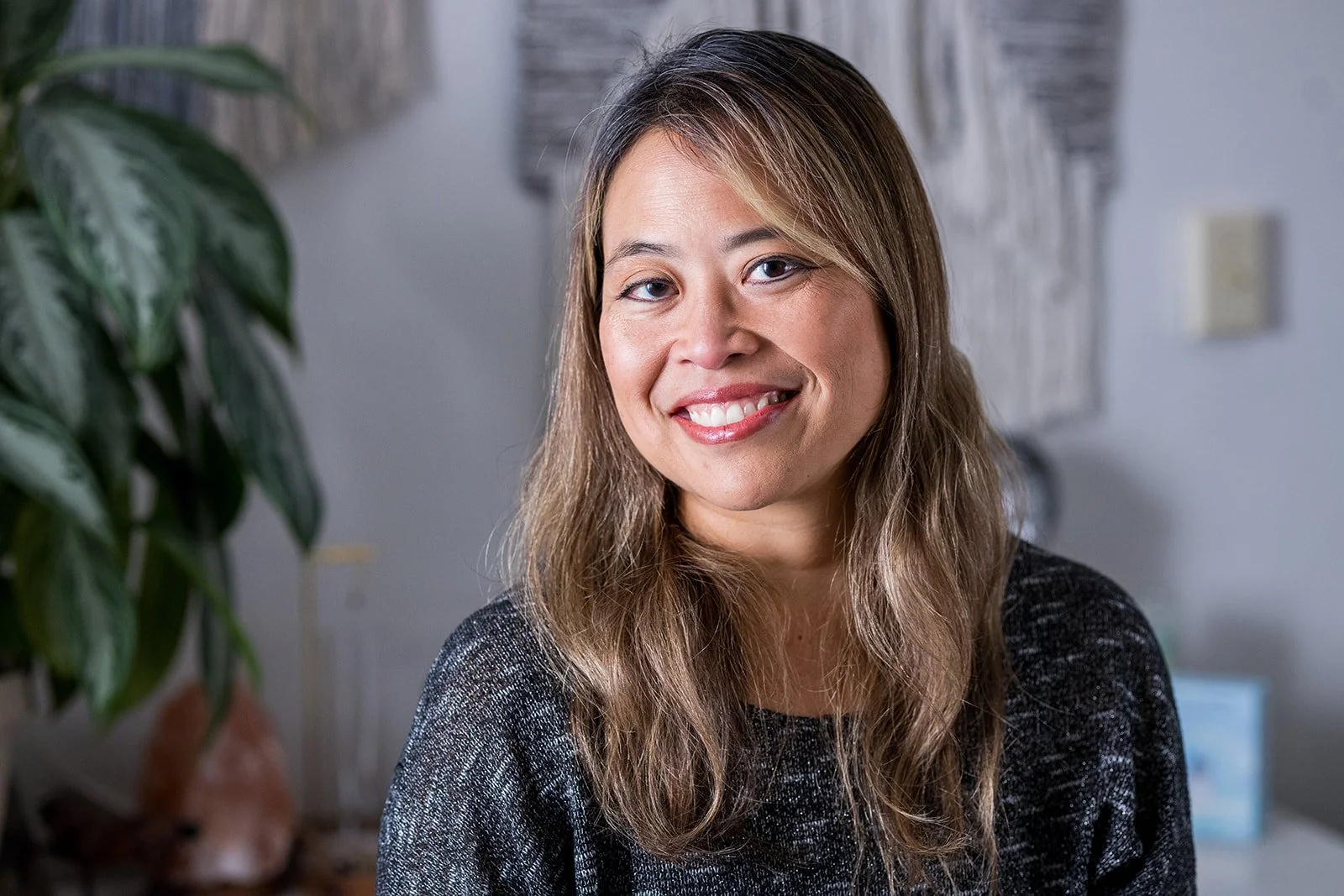
About Kris
Myofascial Release Specialist · Doctor of Physical Therapy
The Shared Frustration
I spent years as a physical therapist watching people do everything right and still not get better.
These were people who were doing everything they were supposed to do. Showing up, doing their exercises, following through on every recommendation. And a lot of them did get better, up to a point. But there was a ceiling for so many of them. The pain would ease but never fully go away. Progress would stall out. And at some point, the sessions started to feel more like maintenance than actual healing.
I started to wonder if the work I was doing was actually helping, or if people were just healing on their own with time.
That question stayed with me. And eventually, it led me away from physical therapy entirely.
I left the profession for seven years.

The Turning Point
When I came back in 2018, it was in a different setting: the hospital. And it was there that I discovered the John Barnes approach to Myofascial Release.
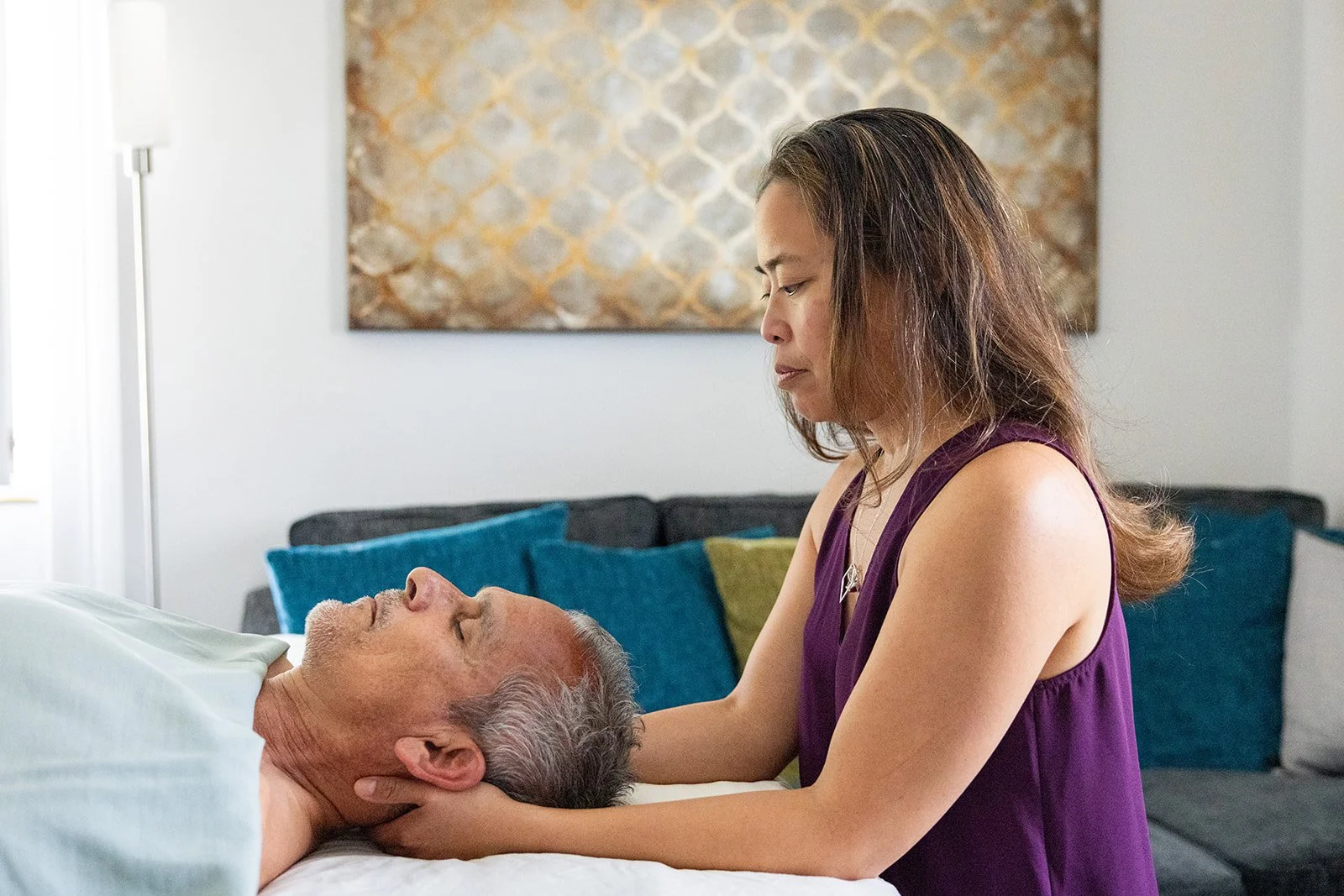
I experienced it first as a patient. Someone put their hands on me and held them there, gently, for what felt like a long time. And something in my body let go that I didn’t even know I was holding. I got off that table feeling different than I had in years — looser, calmer, like something had actually shifted instead of just being temporarily relieved. Like my body didn’t have to brace anymore. Like it could just be, and let go.
And the thing that struck me was that the physical release and the emotional release weren’t separate. They happened together. As the tension in my body let go, something deeper came with it — stress, holding patterns, things I’d been carrying that I didn’t have words for. I’d spent over a decade treating the body as if it were just a physical thing, and in one session I felt how much more was stored in there.
The physical pain and the emotional weight were connected, and this was the first approach I’d ever encountered that actually addressed both at once.
After more than a decade in the field, I finally understood what I’d been missing.
I began studying immediately. I took every course I could. And I started using MFR with my hospital patients, many of whom were medically complex and in severe pain that even medication wasn’t fully managing. People who had been rigid and guarded would soften on the table. Pain levels that hadn’t budged in weeks would drop after a single session. I watched patients who had stopped believing anything would help start to feel different. That’s when I knew I wanted to build my whole practice around this.

Who I Am Now
Today, I practice exclusively through the lens of John Barnes Myofascial Release. This is not something I add onto traditional physical therapy. It is the framework through which I evaluate and treat every person who walks through my door.
I hold a Doctorate in Physical Therapy from California State University, Long Beach, and a degree in Kinesiology and Exercise Science from the University of Southern California. Over the past 20+ years, I’ve worked in outpatient orthopedics, acute rehabilitation, and inpatient hospital settings.
I continue to attend MFR seminars around the country and have studied alongside John Barnes and experienced practitioners at his treatment center in Sedona, Arizona.
I keep training because this work asks a lot of the practitioner. It’s nuanced. It requires patience and a real understanding of how fascia responds, not just physically but neurologically, and sometimes emotionally. I want to bring that depth to every session.
Coursework:
MFR I, II, and III · Fascial-Pelvis · Cervical-Thoracic · Pediatrics · Mobilizations · Rebounding · Unwinding · Advanced Unwinding · Subtle Energy · Quantum Leap · Skill Enhancement Seminar · Therapy for the Therapist
The Personal Side
Outside of the treatment room, I’m a mom to two preteen girls who keep me honest about staying present and flexible. I love to dance and I love to move. Being active in my own body isn’t separate from this work. It’s part of it.
What Guides My Work
Presence. Listening. Compassion over judgment. Curiosity over assumption.
I don’t rush sessions. I don’t chase symptoms. And I don’t treat you like a diagnosis.
I treat you as a whole person. What you’re carrying matters to me, not just where it hurts.
No matter your background, your identity, or your story, you are welcome here.
Because healing can only happen when your nervous system feels safe.